As national health awareness continues to rise, the market for functional large health products such as probiotic powders and dietary fiber powders is growing steadily. These products are generally packaged in stick packs, which are portable and easy to consume, and are highly favored by consumers. However, in the secondary packaging stage of production, they face many practical challenges. The emergence of unordered material sorting machines has provided an efficient and feasible automated solution for large health stick pack production.
Probiotic and dietary fiber powder stick packs are mostly lightweight soft bags. The bag bodies are soft and prone to wrinkling, easy to stick together and stack, and after incoming material, they are often randomly oriented with inconsistent front and back sides. Traditional production models rely on manual material sorting, counting, and cartoning, which is not only labor-intensive but also prone to problems such as inaccurate counting, bag damage, and incorrect cartoning orientation. Manual operation efficiency is limited. During peak order seasons, labor costs continue to rise. At the same time, the defect rate caused by manual operation also increases material loss for enterprises and affects product quality before leaving the factory.
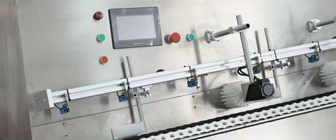
Unordered material sorting machines are specially designed for scattered stick bag materials. They can achieve unordered feeding, automatic sorting, posture correction, and precise counting, perfectly adapting to the production needs of such large health stick pack products. The equipment is equipped with intelligent recognition and flexible material sorting structures. There is no need for manual placement of bags in the correct orientation. After scattered materials are poured into the hopper, the machine automatically breaks up stacked bags, corrects the front and back sides and orientation of the bag bodies, arranges the disordered stick packs into a neat and orderly state, and then connects with cartoning equipment to complete subsequent processes.
In large health food production scenarios, the equipment uses food-grade 304 stainless steel material, with a surface free of cleaning dead corners, making it easy to clean and disinfect. It complies with health production standards for health foods and avoids risks of dust and cross-contamination. The flexible conveying structure avoids squeezing and friction, protects the outer packaging of powder stick packs to the greatest extent, reduces bag breakage and powder leakage, and effectively lowers defect losses. At the same time, the equipment counts accurately and can freely set the number of stick packs per box, eliminating quality hazards such as overfilling or underfilling, ensuring uniform specifications for each box of products, and helping enterprises meet quality control requirements.
Unordered material sorting machines can seamlessly connect with upstream bag-making equipment to achieve integrated assembly line operations of material sorting, counting, and cartoning. This greatly reduces the number of frontline operators, improves the production efficiency of the entire production line, supports long-term continuous production, and adapts to the flexible production needs of large health enterprises with large volumes and multiple categories.
Under the wave of upgrading in the large health industry, packaging automation is an important part of improving quality and efficiency for enterprises. Unordered material sorting machines have solved the pain points in the secondary packaging of stick pack products such as probiotic and dietary fiber powder stick packs, helping enterprises reduce costs, control quality, and improve efficiency. They help large health products achieve large-scale and standardized production, empowering the high-quality development of the industry.




 中文版
中文版







 Location: