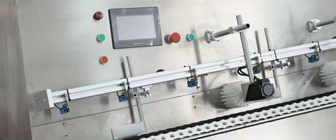
As automation upgrades continue to deepen in industries such as food, the large health industry, pet food, and daily chemicals, unordered material sorting machines, as key front-end equipment for back-end packaging, continue to expand their application scenarios. In the past, equipment mainly focused on purely mechanical material sorting. Today, the industry is iterating and upgrading toward intelligence, flexibility, modularization, and digitalization, continuously adapting to the modern production needs of multiple categories, small batches, and high-speed stability.
First, flexible upgrading to adapt to multi-variety mixed-line production. Market consumption is becoming increasingly diverse, and enterprises are accelerating product iteration. Product specifications such as coffee sticks, probiotic stick packs, cat treat sticks, and daily chemical sample pouches are frequently switched. Traditional sorting machines take a long time to change over and debug. In the future, unordered material sorting machines will place greater emphasis on modular structural design and adopt parameter recipe storage to achieve rapid changeover. Multi-channel models will become more widespread, allowing channels to be turned on or off as needed, balancing large-volume production and small-batch trial production. They can adapt to soft pouch materials of different sizes without changing the hardware structure, better meeting the development requirements of flexible manufacturing.
Second, intelligent integration, introducing vision and adaptive control. At present, unordered material sorting mainly relies on mechanical rollers and guide mechanisms to correct materials. In the future, machine vision inspection technology will be gradually integrated to identify material posture, stacked packs, and damage in real time. The equipment will automatically adjust roller speed and gap parameters according to material status to achieve adaptive material sorting. At the same time, it will integrate fault self-diagnosis to automatically identify problems such as material jamming and counting abnormalities, issue timely alarms, reduce manual troubleshooting time, lower downtime losses, and improve equipment operation stability.
Third, digital interconnection, connecting to factory intelligent manufacturing systems. The popularization of intelligent manufacturing is driving material sorting equipment to no longer be an isolated standalone machine. The new generation of unordered material sorting machines will have data collection capabilities and can connect to MES production management systems to upload material sorting capacity, counting data, and equipment operating status in real time, achieving production data traceability. The equipment will support remote monitoring and remote debugging, making it convenient for manufacturers to carry out predictive maintenance, predict component wear in advance, and transform passive repair into preventive maintenance, further improving the overall equipment effectiveness (OEE) of the entire line.
Fourth, structural optimization, with greater emphasis on hygiene, energy saving, and low loss. In the food and health product industries, hygiene standards are constantly improving. Equipment will continue to optimize its structure, reduce hygiene dead corners, adopt food-grade materials, and make disassembly, assembly, and cleaning more convenient. At the same time, the transmission structure will be optimized, and energy-saving servo motors will be selected to reduce equipment noise and energy consumption. For soft pouch materials, flexible material sorting components will be further optimized to minimize squeezing and friction, reduce pouch breakage and scratching rates, and improve finished product yield.
Fifth, integrated integration, connecting the entire back-end packaging production line. Unordered material sorting machines will no longer be just standalone machines. They will increasingly become part of complete line solutions and can seamlessly connect with cartoning machines, checkweighers, rejection machines, and other equipment. The rhythm of the equipment and back-end main machines will be collaboratively optimized to achieve integrated operations of material sorting, counting, cartoning, and quality inspection, reducing intermediate transfer links and improving the operating efficiency of the entire back-end packaging line.
In summary, unordered material sorting machines are evolving from purely mechanical material sorting equipment into intelligent, flexible, and digital comprehensive solutions. By following the trend of manufacturing upgrading and continuously optimizing equipment performance, they will better serve industries such as food, the large health industry, and pet food, help enterprises reduce costs and improve efficiency, and promote the high-quality development of the packaging industry.




 中文版
中文版







 Location: